
Menu — PAM Native UI
PAM Native UI · Android evidence
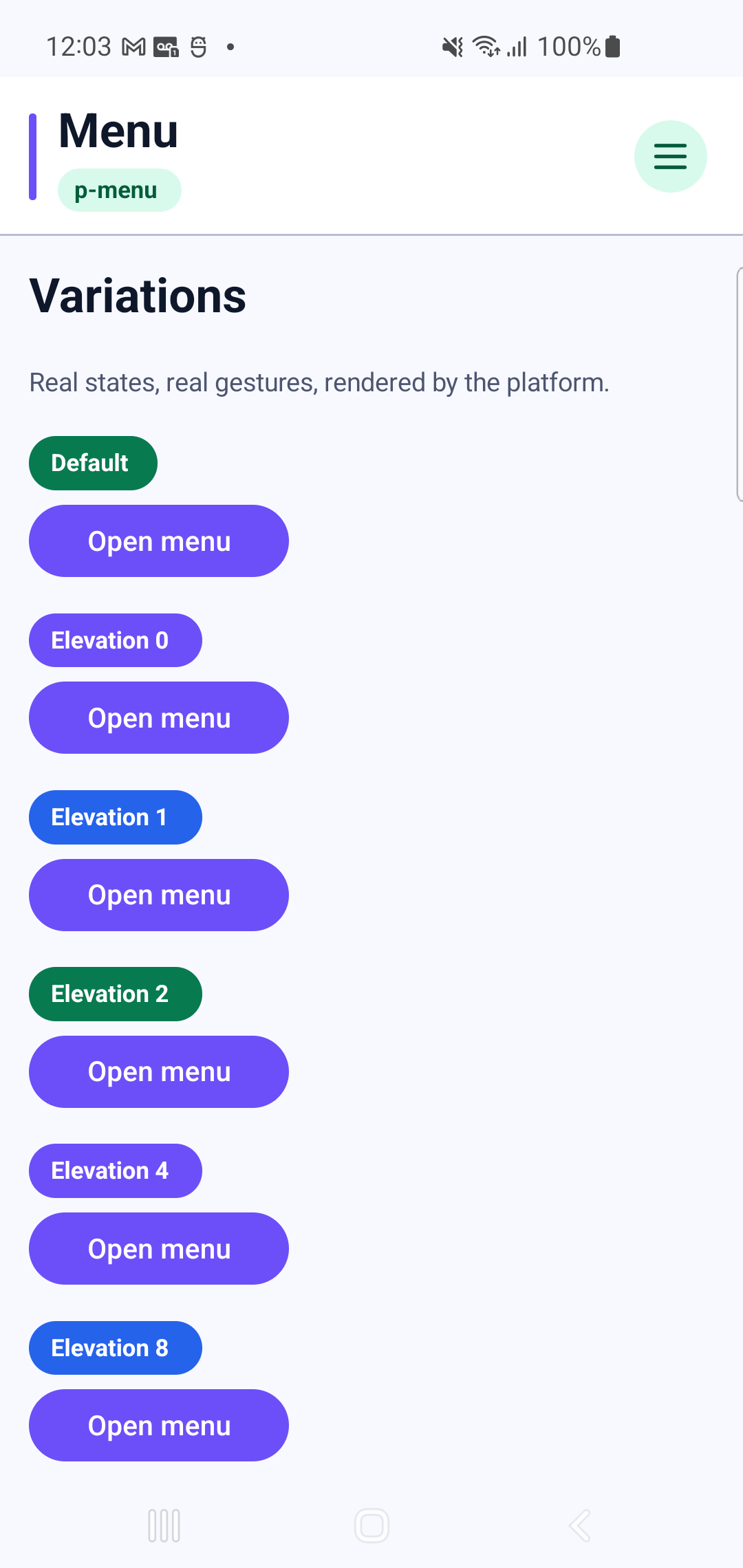
p-menu rendered by the production retained-native pipeline. The specimen below is a real Physical Samsung SM-G973F Android 12 (API 31) capture at 420 dpi, not an HTML recreation.
Physical Samsung layout, route and native interaction verified
- Family
- Overlays and feedback
- Module
menu- PHP facade
PMenu- Native targets
- Android · UIKit
Overlays and feedback component rendered through the retained-native Android and UIKit pipeline.
Android specimen
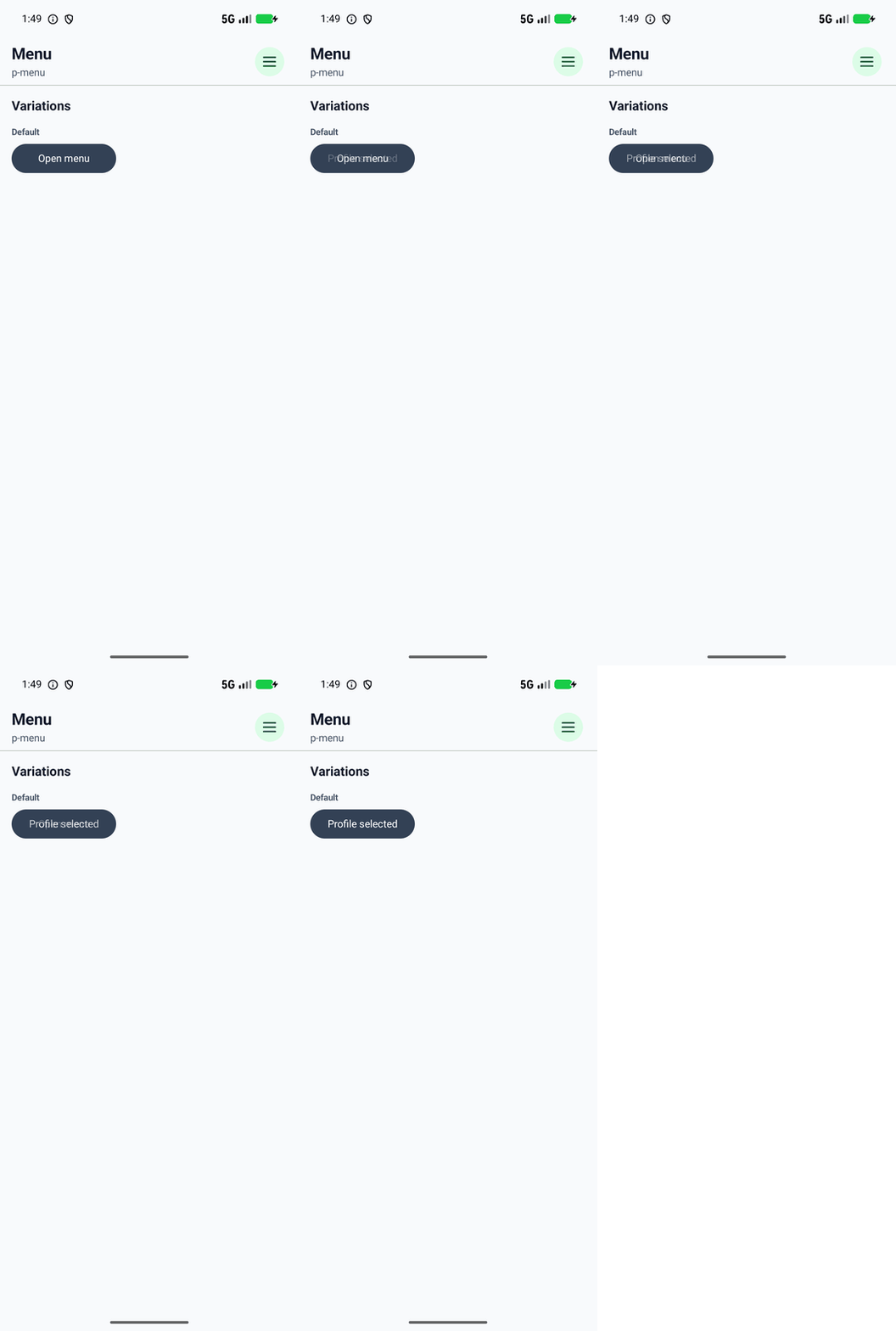
Interaction recording
The touch trace was captured from the Android application while exercising the native component.
Showcase profiles
Every profile below is rendered by the Android catalog route shown above.
- Default
- Elevation 0
- Elevation 1
- Elevation 2
- Elevation 4
- Elevation 8
- Elevation 12
- Elevation 16
- Elevation 24
- Location Top
- Location Top Start
- Location Top End
- Location Bottom
- Location Bottom Start
- Location Bottom End
- Location Start
- Location End
- Open On Click
- Open On Long Press
- Persistent
PHP usage
use Pam\MobileUi\Material\PMenu;
use Pam\Native\UI\Text;

PMenu::make(
    [
        'accessibilityLabel' => "PMenu preview",
        'elevation' => 0,
        'location' => "top",
    ],
    Text::make('Menu'),
);
The equivalent PAM template entry point is <p-menu>…</p-menu>.
See the PAM Native UI guide for event, state and styling conventions, and the quality contractfor native behavior requirements.
Component properties
| Property | Observed type | Showcase values |
|---|---|---|
accessibilityLabel | string | "PMenu preview" |
elevation | int | 0, 1, 2, 4, 8, 12 |
location | string | "top", "top start", "top end", "bottom", "bottom start", "bottom end" |
open | bool | false |
openOnClick | bool | true, false |
openOnContextmenu | bool | true |
persistent | bool | true |
placement | string | "top", "top start", "top end", "bottom", "bottom start", "bottom end" |